
In the Chapel Perilous
On Schattenfroh and the maximalist novel

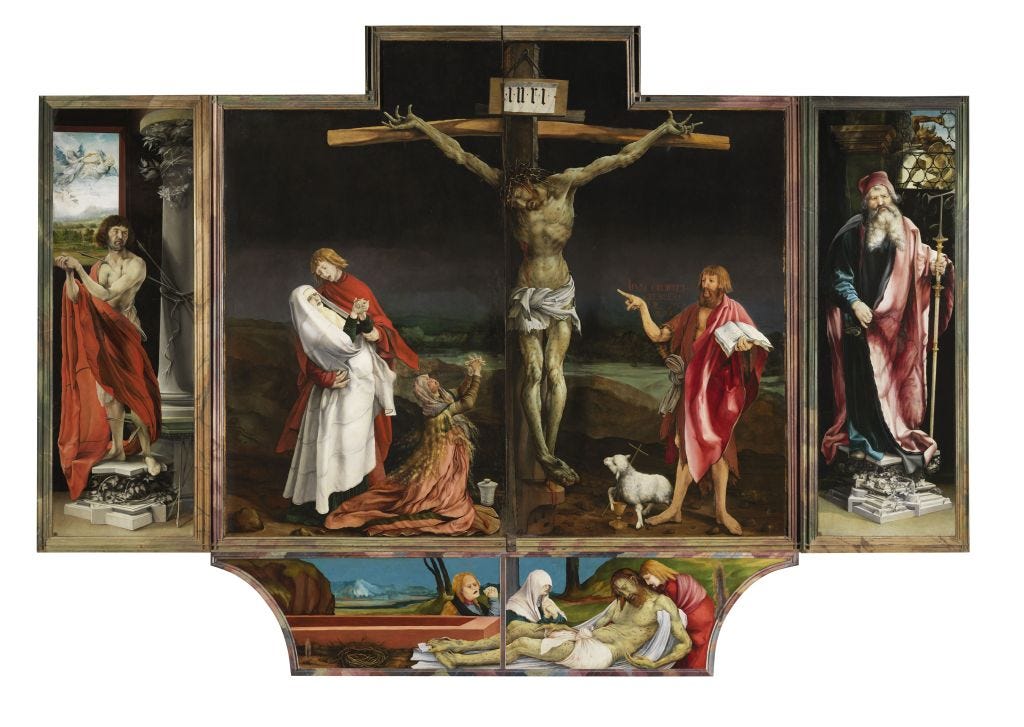
Like many literary perverts, I have long been attracted to those epic thousand page tomes that are held in reverential awe - Ulysses, Gravity’s Rainbow, The Magic Mountain, you know the ones. They are a masochistic pleasure, a voluntary Stockholm Syndrome and, of course, come with bragging rights. In my university days, the tome de jure was Infinite Jest, the white whale for undergraduates to conquer alongside the course syllabus, Wallace’s legend only forming after his recent death, just before the litbro backlash set in. The translation of Schattenfroh in English last year promised to be a similarly momentous addition to the maximalist canon.
In a culture that seems to suffer from generalised attention deficit disorder, there is a magnetic allure to the long novel; we might initially be scared to enter its pole of attraction with so much other swifter and more palatable books on offer but all of a sudden we find ourselves engrossed. Before I knew it I had breezed through a hundred pages of Schattenfroh, unable to remember a time before having started it, in thrall to its incantatory meditation on the Judeo-Christian foundations of representation in European culture and exploring the richness and darkness of German history. Soon it had began to bend my reality, all my other cultural consumption sucked into its field like a black hole, as if my life had been designed to meet this moment of reading. One evening while reading, I had a Swans’ record on in the background, only for its lyrics to mingle with the very words I was reading:
Here I am, just empty skin
There is no way out, there is no way in
Crucified in fractured fields of blue
All information is equally true
In the very rarely broken up, serpentine monologue, almost all transcribed directly from the thoughts of our narrator wearing a headset, I felt similarly stuck in a textual labyrinth filled with depictions of the crucifixion which strains for the encyclopaedic but inevitably contradicts itself and comes up against its limitations: we the reader have to accept that ‘all information is equally true.’ Then I began to see it everywhere. I couldn’t help be reminded of the authoritarian father figure that looms over the Schattenfroh narrator in Geese’s ‘Long Island City Here I Come’ which describes a man that ‘sat behind a desk that was a million feet wide.’ By the time I found myself watching Klaus Kinski’s Jesus Christ Saviour in preparation for Benjamin Myers’ new novel, I wondered if I had unwittingly entered chapel perilous.
It shouldn’t be surprising that such works inspire a feeling of paranoia as most works of this kind have a propensity to reflect on their own creation, Schattenfroh being no exception, forcing a comparison with the construction of our world outside the book. The anguished cry of Gravity’s Rainbow, ‘Everything is connected!’ rings out, in the author’s mind as they struggle to contain the complexities of their work’s universe and in ours, the reader, as we try to follow it or cognitively map it, in Fredric Jameson’s parlance. While there were brief moments of vertiginous pleasure as I would get lost in Lentz’s cathedral of depraved religious imagery, its dense formal architecture throwing my own reality into relief, ultimately I found the relentlessness of its orotund voice deprived Schattenfroh of the ragged majesty and transcendence that strikes me in other maximalist works. There is something of an irony here given the religious material involved. To read a novel of this scope becomes a ritual and requires the protestant work ethic Schattenfroh seeks to thematise.
As we commemorate the 30th anniversary of Infinite Jest, the value of such maximalist works is back in the critical conversation. ‘Have we forgotten how to read it?’ the New Yorker headline asks. While there is a value to the devotional act of reading a long text, retreating from the busyness of the world to reflect on its construction but perhaps at this moment we should be focusing on asking why we are all so hellbent on escaping our reality. Is there much difference between poring over an abstruse 1000 page modernist novel and going down the wormhole of online conspiracy theories? Both bombard the reader with an overwhelming amount of data, often obscured by outré typesetting, about individuals whose interiority will always remain inaccessible and reducing the reader to making fumbling connections to construct a legible reality that will always fall short.
As always, Don DeLillo articulated such paranoid speculations first. In Libra, his CIA historian, Nicholas Branch, muses that the Warren Commission report into the assassination of JFK is ‘is the megaton novel James Joyce would have written if he’d moved to Iowa City and lived to a hundred,’ DeLillo later elaborating in an interview ‘I asked myself what Joyce could possibly do after Finnegans Wake, and this was the answer.’
"....and this was the answer."
Is that where this article ends?